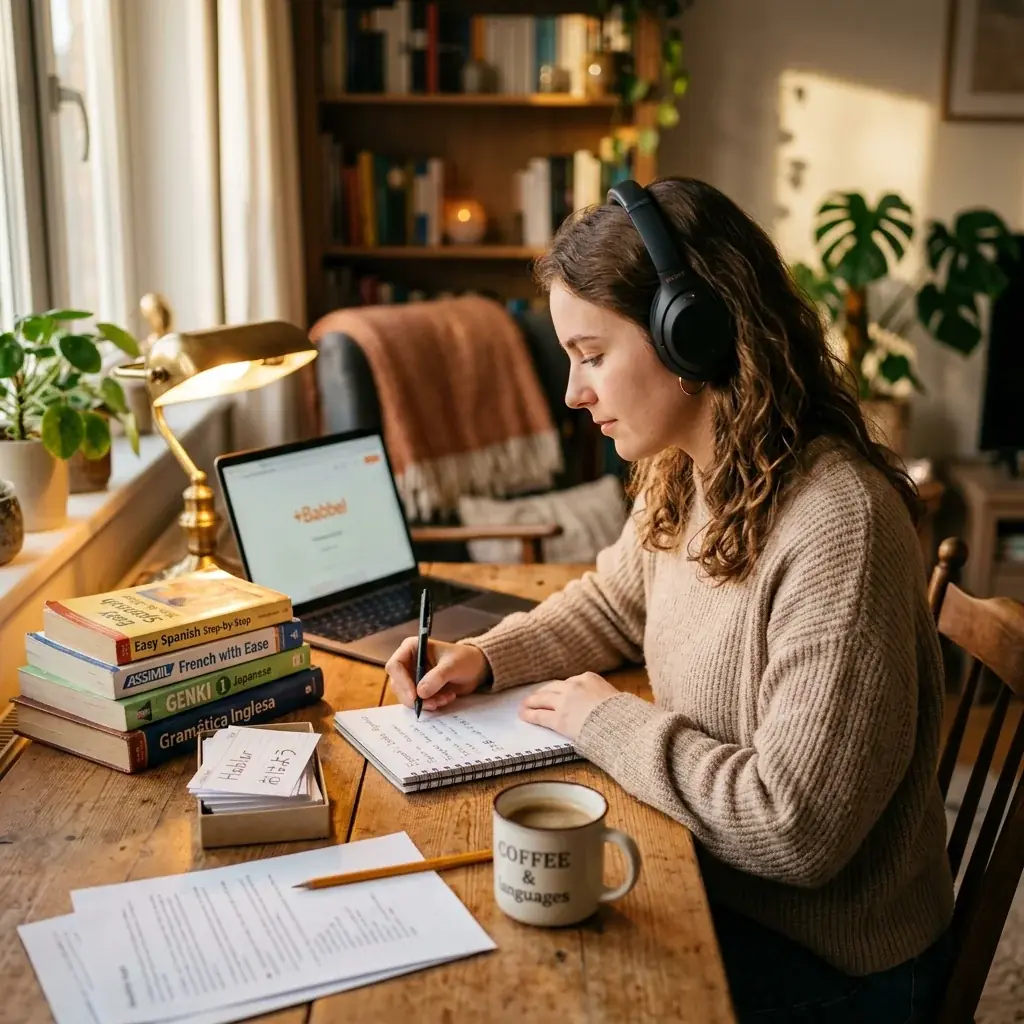
English is no longer just an additional language—it is a fundamental skill for everyday life, work, and education.

Learning a new language can be exciting, but staying consistent is where many people struggle. You may start with a lot of motivation, learn a few words, and then wonder what you should do next. Finding the best way to learn a language can make the whole process much easier.
There isn't one method that works for everyone. Some learners enjoy speaking and conversation, while others prefer classes, reading, listening, or a mix of different activities. The important thing is to choose a routine that feels manageable and gives you regular opportunities to actually use the language.
Instead of trying to learn everything at once, focus on small steps and keep practicing. Here are 10 practical methods that can help you learn a language more naturally and stay motivated along the way.
Live classes are a great starting point if you want guidance while learning. An experienced instructor can explain difficult concepts, correct mistakes, and help you understand how the language is actually used.
The biggest advantage is interaction. Instead of only reading a textbook or watching a recorded lesson, you can ask questions and practice speaking during the class. Regular feedback can also help you avoid repeating the same mistakes.
You don't need to wait until your grammar is perfect before you start speaking. In fact, speaking from the beginning can help you become more comfortable with the language.
Try speaking with your teacher, a friend, or a language partner every day. Even a short conversation can be useful. Talk about your day, describe what you're doing, or practice common situations such as ordering food or introducing yourself.
The goal is to use the language, not simply memorize it.
Trying to memorize thousands of words at once can quickly become overwhelming. A better approach is to start with vocabulary that you are likely to use regularly.
Learn words and phrases related to greetings, family, work, travel, food, shopping, and everyday conversations. Once these become familiar, you can gradually add more advanced vocabulary.
Learning complete phrases can also be more useful than learning individual words because you begin to understand how words naturally fit together.
One of the easiest ways to make a language part of your daily routine is to surround yourself with it.
Watch videos, listen to podcasts, follow social media accounts, read short articles, or watch shows in the language you're learning. You don't have to understand every word at first.
Start with content that is easy enough to follow and slowly move toward more challenging material. Over time, you'll become more familiar with pronunciation, sentence patterns, and everyday expressions.
Speaking with native speakers can give you a different perspective on the language. They can introduce you to natural expressions, common phrases, pronunciation patterns, and conversational habits that aren't always found in textbooks.
Don't worry about making mistakes. Mistakes are a normal part of learning. The more opportunities you have to communicate with real speakers, the more confident you can become.
Language apps and online resources can be useful for building vocabulary, practicing grammar, and reviewing lessons.
However, they work best when used alongside structured learning rather than as your only source of education. You can use an app for quick vocabulary practice, then use a live class or conversation session to put those words into practice.
Combining different resources can make your study routine more balanced.
Grammar is important, but memorizing rules for hours isn't always the most effective approach.
Instead, try learning grammar through real sentences and conversations. When you see how a particular structure is used in everyday communication, it becomes easier to remember and apply.
For example, rather than memorizing a tense rule by itself, learn several sentences using that tense and then create your own examples.
Having a clear goal can make it easier to stay motivated. Instead of saying, “I want to become fluent,” start with smaller and measurable targets.
You might aim to learn 10 new words a day, complete three speaking sessions a week, or hold a five-minute conversation by the end of the month.
Small achievements add up. Tracking your progress can also help you see how far you've come.
Listening is an important part of understanding a language naturally. Try to hear the language every day, even if you only have a few minutes.
Start with slower conversations, beginner podcasts, or videos with subtitles. As your listening skills improve, move toward normal-speed conversations and more advanced content.
Regular listening helps you become familiar with different accents, pronunciation, rhythm, and common expressions.
Consistency is perhaps the most important part of language learning. Studying for five hours one day and then doing nothing for the next two weeks is usually less helpful than practicing for 20–30 minutes every day.
Create a routine that you can realistically maintain. A little practice each day keeps the language fresh and gives you more opportunities to build on what you've already learned.
There is no exact amount of time it takes to learn a language because everyone learns differently. It depends on the language, your current level, how often you practice, and how comfortable you want to become with speaking it.
Learning basic words and having simple conversations can happen fairly quickly with regular practice. Reaching a higher level, where you can speak confidently in work, study, or everyday situations, naturally takes more time.
Your daily routine also makes a big difference. Someone who spends a little time speaking, listening, reading, and writing each day will usually make better progress than someone who studies only once in a while.
So, instead of worrying about how many months it will take, focus on improving a little every day. With the best way to learn a language for your needs and a consistent routine, steady progress becomes much easier.
The quickest way to learn a language is not about finding one special trick. What really helps is using a few good methods together and making the language part of your daily routine.
Try to speak every day, listen to native speakers, read simple content, and write a few sentences of your own. Getting feedback from a teacher or experienced speaker can also help you notice mistakes and improve faster.
A balanced routine that includes speaking, listening, reading, and writing will give you more practice and help you use the best way to learn a language naturally in everyday situations.
Both online and traditional language classes can work well, but online learning offers some useful advantages for students with busy schedules.
| Factor | Online Language Classes | Traditional Classes |
|---|---|---|
| Flexibility | Learn from different locations | Usually fixed location |
| Accessibility | Join from home or anywhere | Requires physical attendance |
| One-to-One Learning | Easily available | Depends on the institution |
| Live Interaction | Available through live classes | Face-to-face interaction |
| Schedule | Often more flexible | Usually fixed |
| Convenience | No daily travel required | Requires commuting |
For many learners, online classes provide a convenient way to combine structured instruction with everyday practice.
Even motivated learners can make mistakes that slow their progress. Here are some common ones to watch out for:
Trying to learn everything at once: Focus on useful vocabulary and practical communication before moving to advanced material.
Being afraid of mistakes: Mistakes help you learn. Don't wait until your language is perfect before speaking.
Focusing only on grammar: Grammar matters, but communication also requires listening, speaking, vocabulary, and practice.
Not practicing speaking: Knowing vocabulary doesn't automatically mean you can hold a conversation. Make speaking part of your routine.
Studying inconsistently: Regular short sessions are generally easier to maintain than occasional long study sessions.
Learning a language doesn't have to be stressful or complicated. With a mix of live classes, regular speaking practice, useful vocabulary, listening, and real-life exposure, you can make steady progress without feeling overwhelmed.
The best way to learn a language is to find a learning routine that fits your daily life and gives you plenty of chances to actually use the language. Set small goals, practice regularly, and don't be afraid of making mistakes along the way.
You may not notice a big difference every day, but those small improvements add up over time. Stay patient, keep practicing, and you'll gradually become more comfortable and confident using your new language.
The best way to learn a language is to combine structured lessons with regular speaking, listening, reading, and writing practice. Working with an experienced instructor and using the language in real conversations can also make learning more effective.
A consistent combination of daily practice, speaking with others, listening to native speakers, learning common phrases, and receiving feedback can help you make faster progress.
You can begin by using language apps, books, podcasts, videos, and online resources. However, adding speaking practice with a teacher or language partner can help you develop stronger communication skills.
There is no fixed number that works for everyone. Even 20–30 minutes of focused practice each day can be useful if you remain consistent. The important thing is to create a routine you can maintain.
Yes. Online language classes can provide live instruction, speaking practice, learning materials, feedback, and flexible scheduling. They can be especially convenient for learners who cannot attend a physical classroom.
The timeline varies depending on the language, your starting level, practice frequency, and definition of fluency. Regular practice and real-world communication can help you progress steadily toward your desired level.